The Window and the Work: Why Great Rehab Refuses the Trend
Somewhere in every clinician’s feed is a new exercise, a new device, a new caption explaining why the old way was wrong. Some of it is genuinely good. Most of it is a variable dressed up as a revolution. The hard part of rehab was never finding the next technique — it was building the judgment to know which patient needs it, and when.
Manual work opens a window. Loading walks through it.
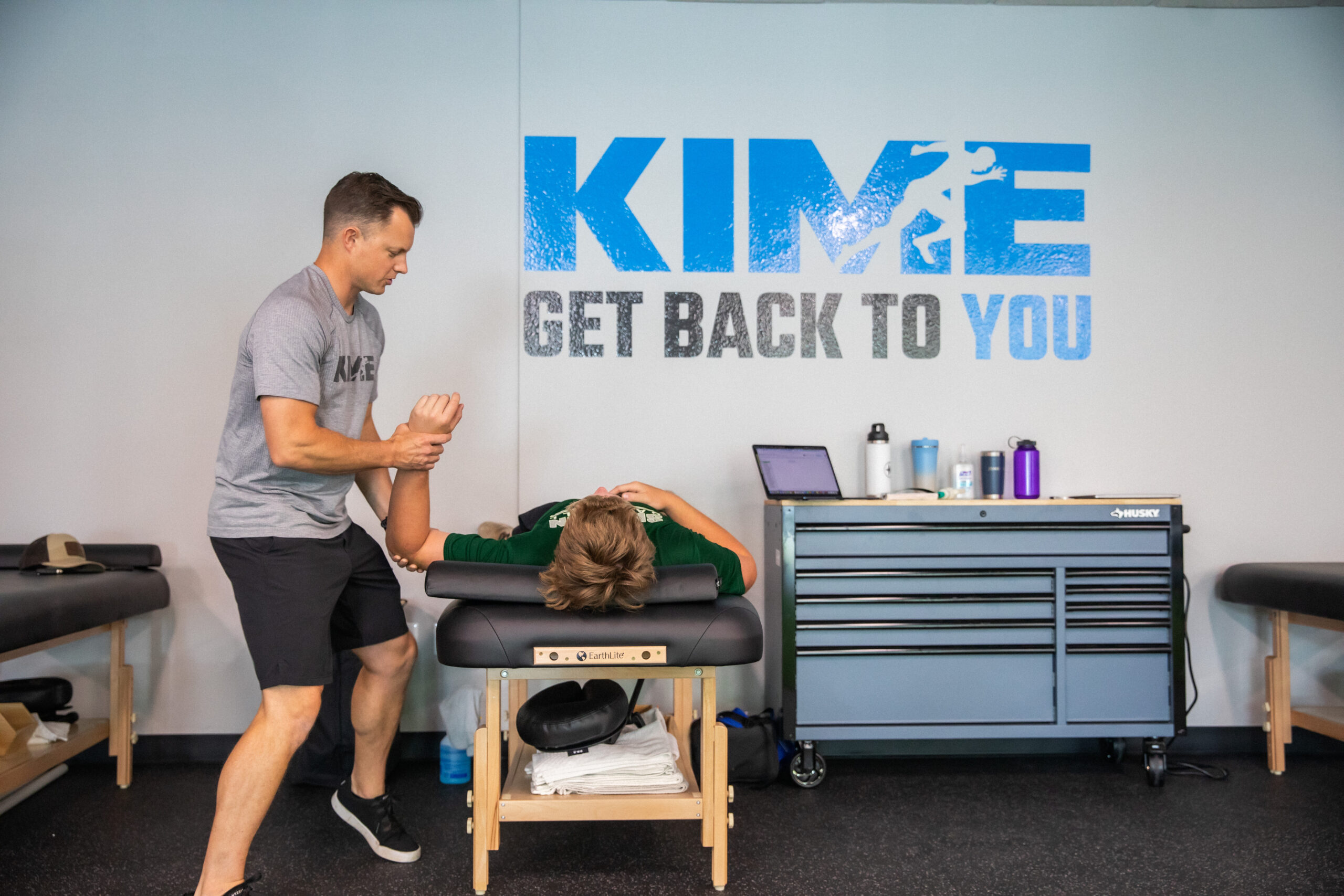
There is an old argument about whether hands-on treatment still belongs in a modern, evidence-minded practice. The more useful framing is narrower: manual therapy creates a window. It reduces pain and restores motion long enough for a patient to move well, load well, and adapt. That window is not the destination. The destination is a loaded program the patient can own — something they can reproduce without you in the room.
This reframes the whole debate. If a manual technique creates a real change, the next question is not “was that evidence-based?” but “how do I recreate that effect as load?” Over a plan of care, hands-on work should keep narrowing. Sometimes it becomes manual-resisted exercise — priming a pattern on the table before the patient carries it into training. The point is that both halves of care deserve equal purpose. A patient can feel where your attention actually goes, and half-hearted work on either end means they lose.
Consistency is not the enemy of individualized care
Clinicians are often taught two things that seem to contradict: every patient is unique, and don’t lock into a protocol. Both are defensible. But without a consistent approach, you have no baseline against which to notice that a patient is drifting off the expected path. The system is what makes the deviation visible. Build a repeatable process for the diagnoses you see most — the same screen, the same early progression — and your ability to detect the patient who doesn’t fit gets sharper, not duller.
A simple weekly grade makes this concrete. Score each week as green (responded well — progress and push), yellow (a few sore days but tolerated — hold and repeat), or red (rest). A vague timeline becomes a refined, explainable one. The patient stops hearing a guess and starts seeing a rationale.
Respect structure again
A useful correction has, in places, overshot. The reminder not to catastrophize imaging or over-label pathology was healthy. But treated as a rule — don’t look, don’t name, don’t consider the tissue — it quietly erodes the one thing that distinguishes this profession: understanding what a structure does, and how a change in pathology changes the mechanical rules. When pathology changes, the rules change. Loading a joint the same way regardless of what the tissue can tolerate is not humility; it’s abdication.
Consider a recurrent joint effusion that keeps being drained and keeps returning. The swelling is a symptom. Fluid is arriving from somewhere — often an intra-articular driver the imaging report never spelled out. Chasing the swelling instead of the cause is the structural equivalent of ignoring the check-engine light because the noise stopped.
Where the trend actually fails
The clearest failures come from importing a trending drill onto a joint that wasn’t prepared for it. A constraint-heavy movement can be a legitimate overload tool — at the right time, for a patient who has built the basics. Dropped in early because it looked compelling on a screen, it flares the very tissue it was meant to help. The trend didn’t fail because it was fake. It failed because it skipped the steps the patient still needed.
Most patients belong on the main path — the known route to the goal. You take the occasional off-ramp for a specific need, then bring them back. Judgment is knowing which is which.
These ideas are explored further on KIMEcast.