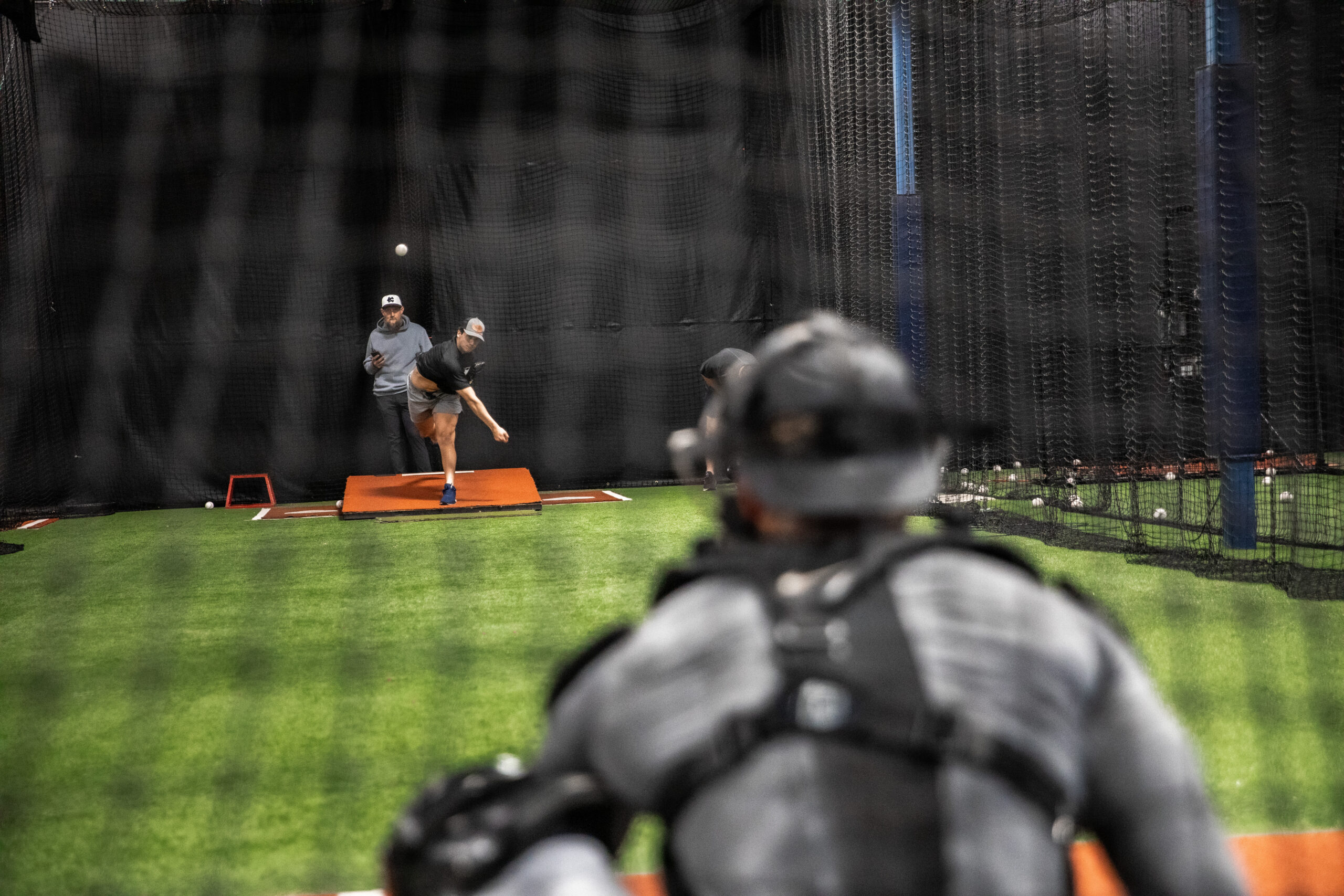
Why the best return-to-sport outcomes come from clinicians who watch athletes compete — and call their coaches.
In the clinic, athletes move on clean floors, rested, with no opponent, no crowd, and no decision to make. The game asks for speed, fatigue, contact, and pressure. Whatever we build in the clinic, it is almost always short of what the sport will demand. Good return-to-sport care closes that gap on purpose.
See them compete
One of the most useful questions a clinician can ask an athlete is: do you have video? Not warm-ups — the late innings, the end of the race, the moment they are tired. That is where the real movement strategy shows up. An athlete treated for arm pain may turn out to have a lower body that can’t get underneath them; the arm is reaching to make up for it. That’s not something an exam table reveals.
Unlock the sport in stages
Every sport has a natural progression back: non-contact skills before live play, technical work at controlled speed before full intensity, intervals before distance. Clear gates — what the athlete has to show before the next step — keep the plan honest and protect against the most common failure: a return driven by the calendar instead of readiness.
Physical readiness and trust don’t always arrive together. Testing can show a knee that is good to go and an athlete who doesn’t yet believe it. Both need training.
Meet the coach in the middle
Coaches own the sport skill. Clinicians see the mechanics and the injury. The best results happen when each meets the other partway. A simple call — what are you seeing, what are you working on — often reveals that both are looking at the same problem through different lenses.
A good sign of a strong sports clinician is how many specialized coaches they can call. That network is earned, and it shows up in outcomes.
Data informs; it doesn’t decide
Force plates and dynamometers have taught the field a great deal. They are most useful alongside movement analysis and coaching, not in place of them. When a single number becomes the whole plan, the hard-to-measure pieces — how well the body links force from the ground up — get missed.
At KIME, we build return-to-sport plans that start with how the athlete actually competes, use testing to guide progression, and keep the coach in the loop all the way back.
These ideas are explored further on KIMEcast Episode 71, the KIME Performance podcast.