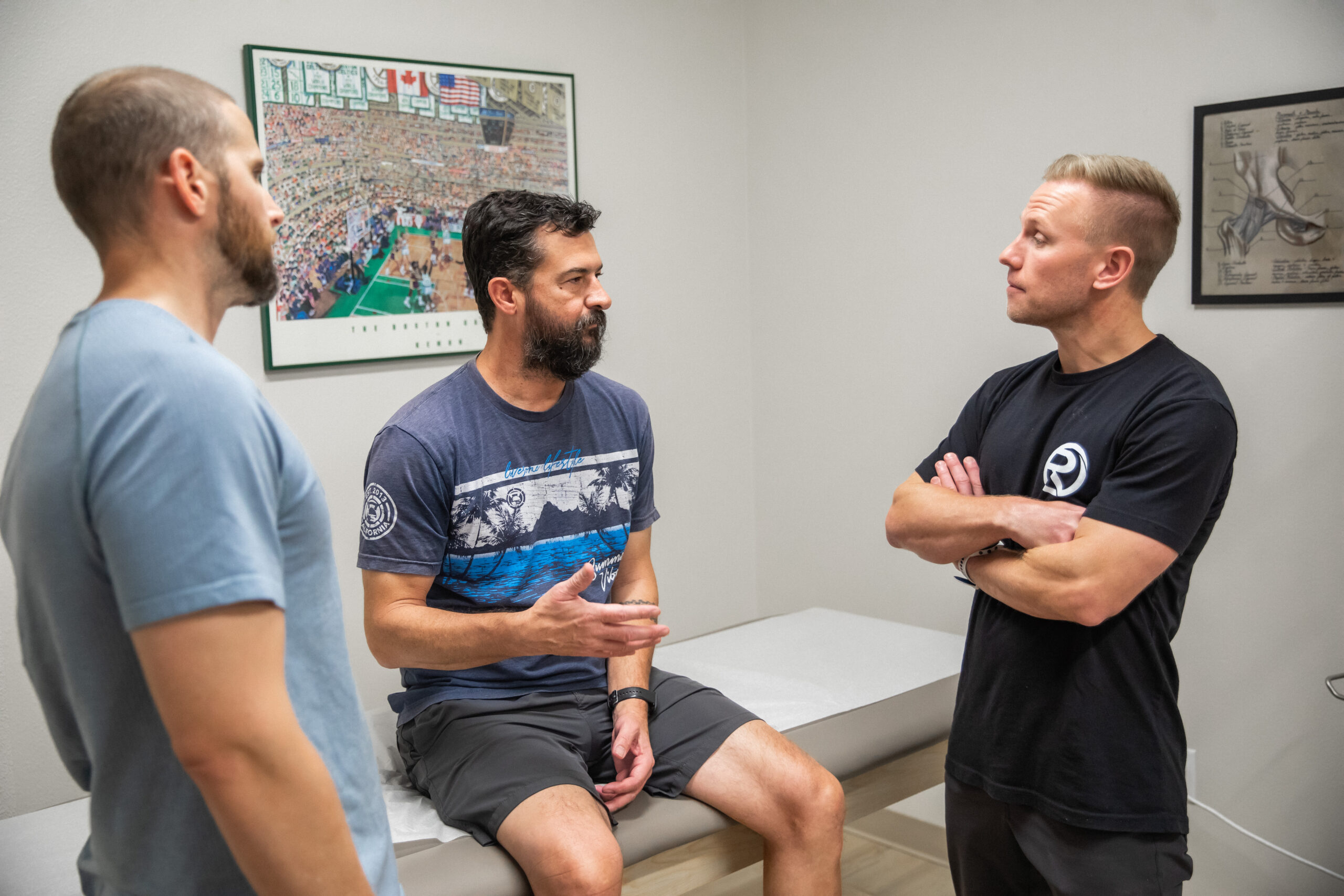
A shared framework for rotator cuff care between surgeons, physicians, and physical therapists.
Most cuff tears are wear, not events
Patients often picture a rotator cuff tear as a single moment — a fall, a lift, a pop. Some are. Most are not. The large majority are attritional: tendon tissue gradually loses biologic integrity, sees more load than it can tolerate, and slowly peels away from the bone. That distinction matters for every provider in the patient’s path, because attritional tears frequently do well without surgery — and many should be managed that way.
What actually drives the decision
A tear on an MRI is a finding, not a plan. The most useful questions are functional: Does the patient have their motion? Have they compensated? How strong are they? And, critically, are they sleeping? Night pain is often the tipping point that brings patients in, and loss of sleep is a quality-of-life signal that moves the conversation toward action.
Biology matters just as much. Age, general health, nutrition, and the degree of muscle atrophy all shape the likelihood that a repair will heal. A fully torn tendon cannot be loaded, so there is a real clock on some tears; a well-compensated, functional patient may never need a repair at all. Surgery is a timed tool, chosen deliberately — not a default response to an image.
Imaging is a clue, not a verdict
Surgeons regularly find that the MRI told only part of the story: a tear that read as full-thickness turns out to be partial, or the reverse. Tear location matters too — undersurface tears tend to tolerate more, while tears on the upper surface often behave like full-thickness tears and may warrant earlier intervention. Clinical examination, function, and the patient’s goals complete the picture.
Rehabilitation on both sides of surgery
Physical therapy is the cornerstone of cuff care whether or not a patient has surgery. Before surgery, it builds strength and motion, unloads irritated structures, and often resolves symptoms altogether — particularly when posture, thoracic mobility, and scapular mechanics are addressed. Pre-operative PT has moved from something patients resisted to something they expect.
After surgery, rehabilitation turns a well-positioned repair into a working shoulder. Modern arthroscopic techniques and implant design have dramatically reduced post-operative pain and stiffness, allowing earlier motion. The patients who still struggle tend to be the ones who assumed surgery alone would fix the problem — which is why expectation-setting from the very first conversation matters.
Why collaboration changes outcomes
The best results come from a closed loop: rapid access to orthopedic evaluation, a thoughtful surgical decision, post-operative communication between surgeon and therapist, and a progressive plan all the way back to sport or full activity. When surgeon and therapist share the same picture of the repair — its tension, its direction, the quality of the tissue — rehabilitation can be precise rather than generic.
At KIME, that collaborative model is how we approach orthopedic care: surgical expertise when it is needed, progressive rehabilitation always, and one shared goal for the patient.
These ideas are explored further on KIMEcast Episode 70 Rotator Cuff Tears | When Surgery Is—and Isn’t—the Answer, the KIME Performance podcast.