72 Miles Through the Night: What KIME Culture Looks Like Outside the Clinic
At 9:00 PM, most people are winding down.
This group was getting ready to run 72 miles around Lake Tahoe.
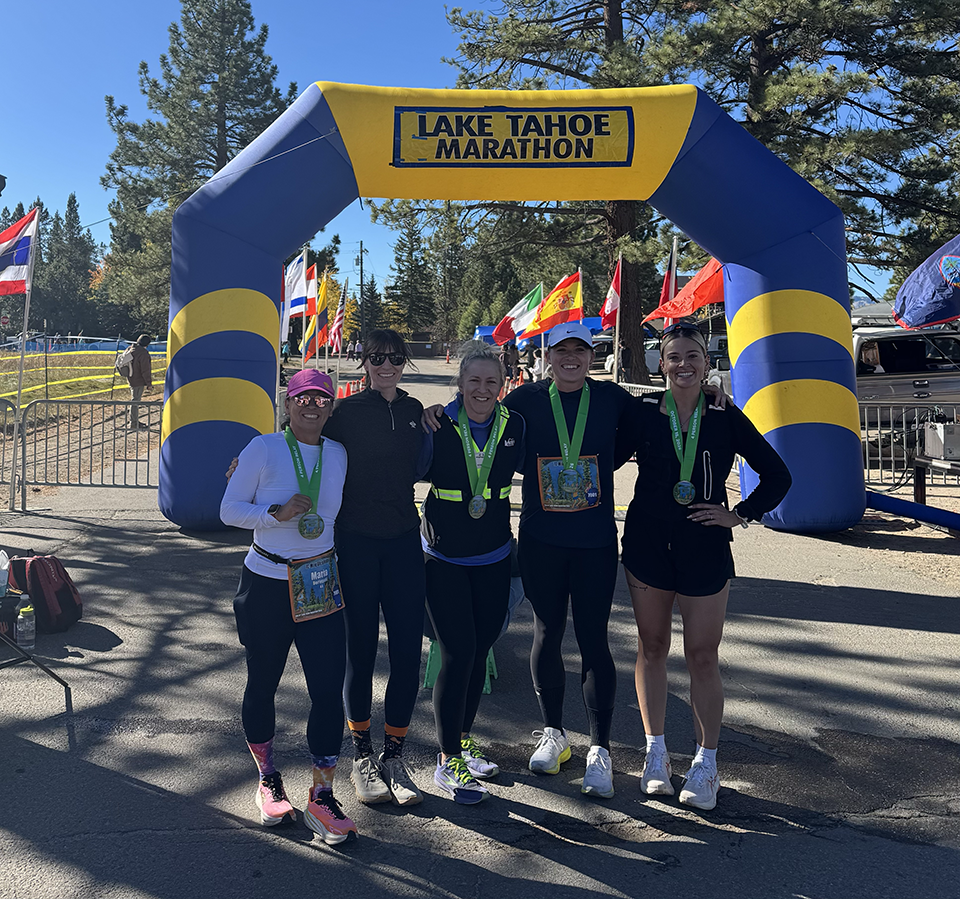
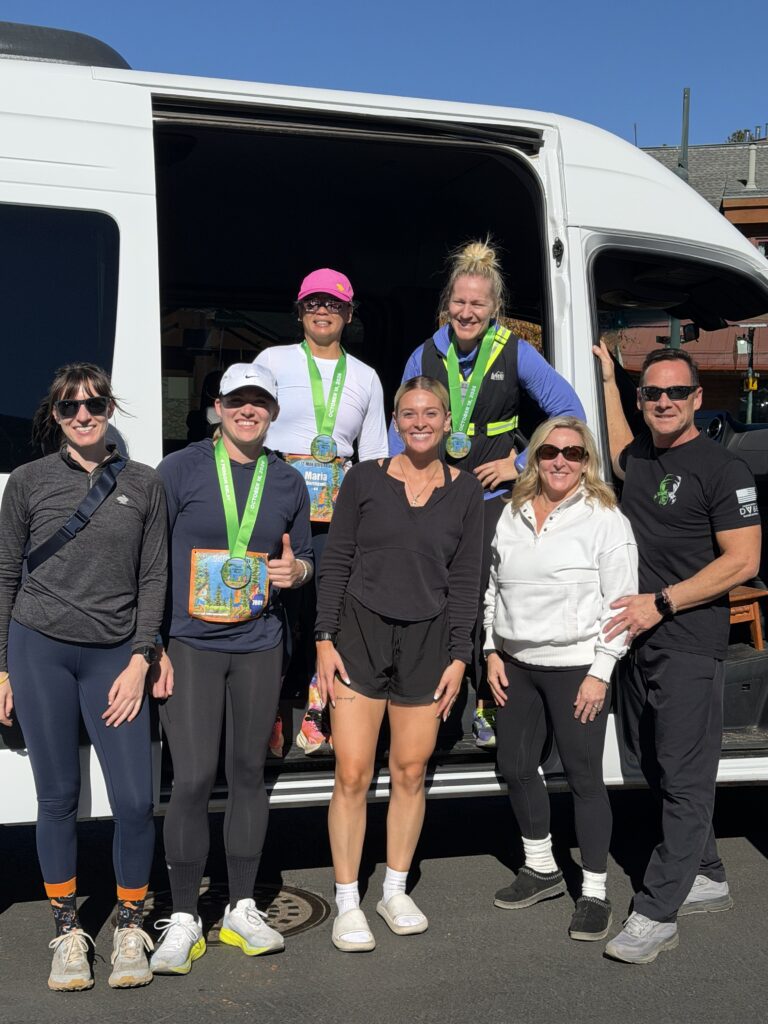
The Midnight Express Relay brought together people from KIME Fit, KIME Physical Therapy, friends and family from across different KIME locations for one long night of running, driving, navigating and keeping each other moving until the finish.
There was no company requirement to be there.
No leadership retreat.
No mandatory team-building exercise.
Just a group of people who decided doing something difficult together sounded like a good idea.
And that might be one of the clearest examples of what working at KIME actually feels like.
The Night Starts
Maria took the first leg as the team began its journey around the lake.
From there, runners rotated through stretches of roughly three miles at a time. Early in the evening, the system felt manageable: run your leg, get back in the vehicle, recover, prepare for the next exchange.
Then the sun disappeared.
The roads became darker. Temperatures started dropping. Headlamps, hand lamps, reflective gear, glow sticks and lighted vests became less like accessories and more like necessities.
The race kept moving.
So did the team.
Jocelyn became one of the most valuable people in the vehicle because she knew the route so well. In the middle of the night, when everyone was tired and every turn felt a little more consequential, having someone who knew where the team was going mattered.
Kenny G became another essential piece of the operation, taking on the driving and helping keep everyone organized, moving and, maybe most importantly, sane through hours of exchanges, cold weather and very little sleep.
That is the thing about a relay like this: the runners may be the ones logging the miles, but no one completes 72 miles alone.
Then There Were Bears
And then there was Kara.
Running through Tahoe City in the dark, Kara had multiple bear encounters during the race — including two on her own.
The team had packed a bear horn.
It turns out that was not excessive preparation.
At another point during the night, the group came across another runner trying to get away from a mama bear and cub and brought her into the vehicle.
It was the kind of story everyone could laugh about afterward.
It probably felt slightly less funny in the moment.
But that became part of the experience too: the unexpected moments, the problem solving and the willingness to look out for people beyond your own team.
When the Race Gets Harder
As the night stretched on, the challenge changed.
It was no longer simply about running three miles and handing off to the next person.
The temperatures dropped into the 20s. Fatigue accumulated. Some runners began taking longer distances. The team had to adjust strategy and mileage on the fly.
Genoa attacked his portions of the course at a faster pace, helping build time wherever possible.
Others stretched their mileage when the team needed it.
Friends and family stepped in to drive, support and run.
The physical challenge was obvious.
The mental challenge was harder to see.
You had to wake up when your body wanted to sleep. Get out of a warm vehicle and step back into freezing air. Run alone in the dark. Trust the person navigating. Trust the runner ahead of you. Be ready when it was your turn.
Then do it again.
And again.
For nearly 15 hours.
Finishing Together
By the final rotation, the goal became bigger than individual mileage.
The team adjusted distances so everyone could come back together and race to the finish as one crew.
Instead of treating the final leg as one person’s finish, they wanted the race to end the same way it had been completed all night: together.
So they ran the final stretch side by side.
Seventy-two miles around Lake Tahoe.
Through darkness.
Through freezing temperatures.
Through exhaustion.
Through a few more bear sightings than anyone would have preferred.
They completed all 72 miles in under 15 hours and, pending official results, appeared to have earned a second-place finish.
But the placing was only part of the story.
This Is What “Do Hard Things” Looks Like
At KIME, we talk a lot about doing hard things.
Usually that shows up inside our clinics and gyms.
It looks like helping someone return to a sport after an injury.
It looks like staying patient through a long rehabilitation process.
It looks like training when progress is slow, learning something new as a clinician or coach, or holding yourself to a higher standard when nobody else is watching.
But culture becomes more interesting when you see what people choose to do outside of work.
People from KIME Fit and KIME Physical Therapy, across different locations, voluntarily running around Lake Tahoe overnight tells you something.
So does the fact that friends and family wanted to be part of it.
So does a navigator knowing the route by heart.
A driver staying awake to keep everyone moving.
A teammate picking up extra mileage.
A group changing its plan so everyone could cross the finish together.
Those moments say more about culture than a value written on a wall ever could.
KIME is made up of competitive people.
Coaches. Clinicians. Athletes. Former athletes. People who like solving difficult problems and seeing what they are capable of.
But competition here does not have to mean competing against the person next to you.
Sometimes it means helping the person next to you keep going.
Sometimes it means taking the next leg.
Sometimes it means driving the van.
And sometimes it means running 72 miles around Lake Tahoe in the middle of the night because someone said, “This sounds hard.”
And everyone else said, “We’re in.”