The gap after discharge is where progress gets lost. Closing it takes one philosophy, one language, and the right people.
Picture a typical path. A patient finishes physical therapy, gets discharged, and heads to a gym that runs on a different philosophy. The progress that took weeks to build meets a program that never asked what was limiting them in the first place. Sometimes it holds. Often, it doesn’t.
The problem isn’t effort on anyone’s part. It’s the handoff. Every transition between providers who don’t share a language is a chance for the plan to break.
One building, the whole movement pyramid
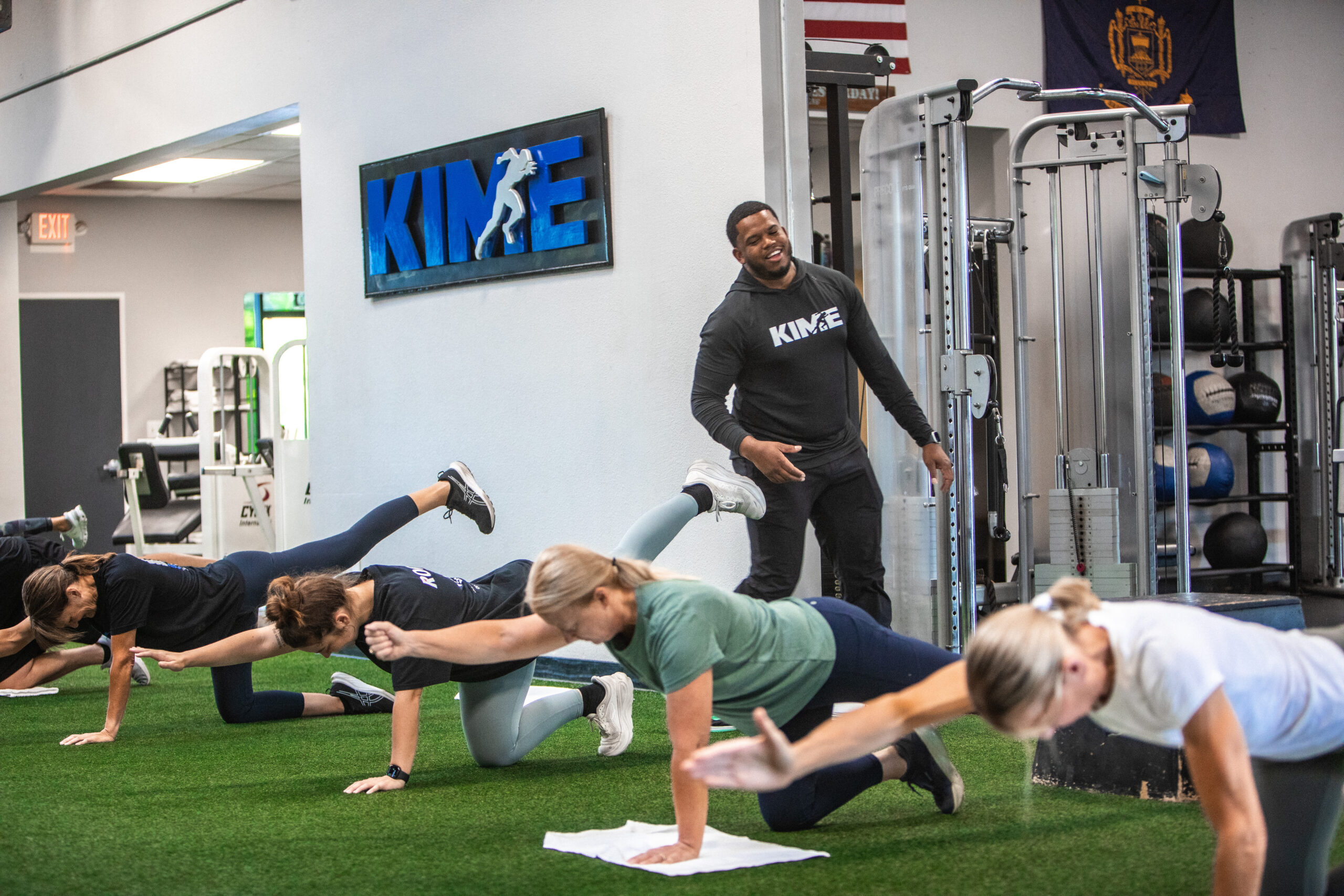
KIME brings physical therapy, performance training, and fitness into one connected system. Someone can walk in on crutches and get started. Someone else can walk in wanting to be faster than they’ve ever been. In both cases, the same people evaluate them, identify their limiting factors, and give them a plan — and when one phase ends, the next one picks up without starting over.
That continuity matters most for the patients you worry about after they leave your care: the post-operative athlete returning to training, the older adult rebuilding strength, the weekend competitor who keeps getting hurt doing the same thing.
A shared question: what’s the limiting factor?
Every KIME plan starts with the same question, whether it’s written by a physical therapist or a coach. That shared starting point is what makes the handoff clean. A strength-and-control deficit identified in rehab stays the priority in performance training rather than getting buried under a generic program.
Seasons instead of grind
Many overuse injuries come from training the same way every day with no recovery built in. KIME Fit programs in seasons: build toward a peak, pull back when life gets heavy, rebuild, and climb again. For referral partners, that means patients who move from care into a program designed to keep them out of your office — not send them back.
Protecting young athletes
Year-round, single-sport youth athletes take on a professional workload without any of the professional support: multidirectional training, recovery, bodywork, nutrition, and a plan. We work with families and coaches to give kids what keeps elite athletes healthy — or to scale the load back when that isn’t possible. Sometimes the most important message a young athlete hears is that it’s okay to take a step back.
Why it works: the people
Integrated models have been tried, usually in elite-only facilities, and they often fall apart for human reasons — conflicting philosophies, ego, or talented people using the model as a launch pad. The model is only as strong as the team inside it. KIME is built around people who want to be here, share a philosophy, and leave ego at the door.
The result is care that follows a person from their first visit to their best performance — and a partner you can trust with what happens after discharge.
These ideas are explored further on KIMEcast Episode 68, the KIME Performance podcast.