AI can write a workable rehab protocol. It cannot read the human in front of you.
Click here to listen to KIMEcast Episode 58 — “The Death of Generic Rehab | AI, Coaching & High Performance” — wherever you get your podcasts.
A sixty-five-year-old man walks into a KIME clinic in great shape — six foot three, two hundred ten pounds, lean and strong. He has knee pain that came out of nowhere four months ago. Mostly gone now. But the MRI is ugly. Medial compartment osteoarthritis. The meniscus has been operated on previously and most of what remains is gone. Grade two-to-three changes throughout.
A family member who is a respected healthcare provider has already read the imaging and delivered the verdict: your knee is smoked. You’re done. Replacement is coming.
He arrives angry.
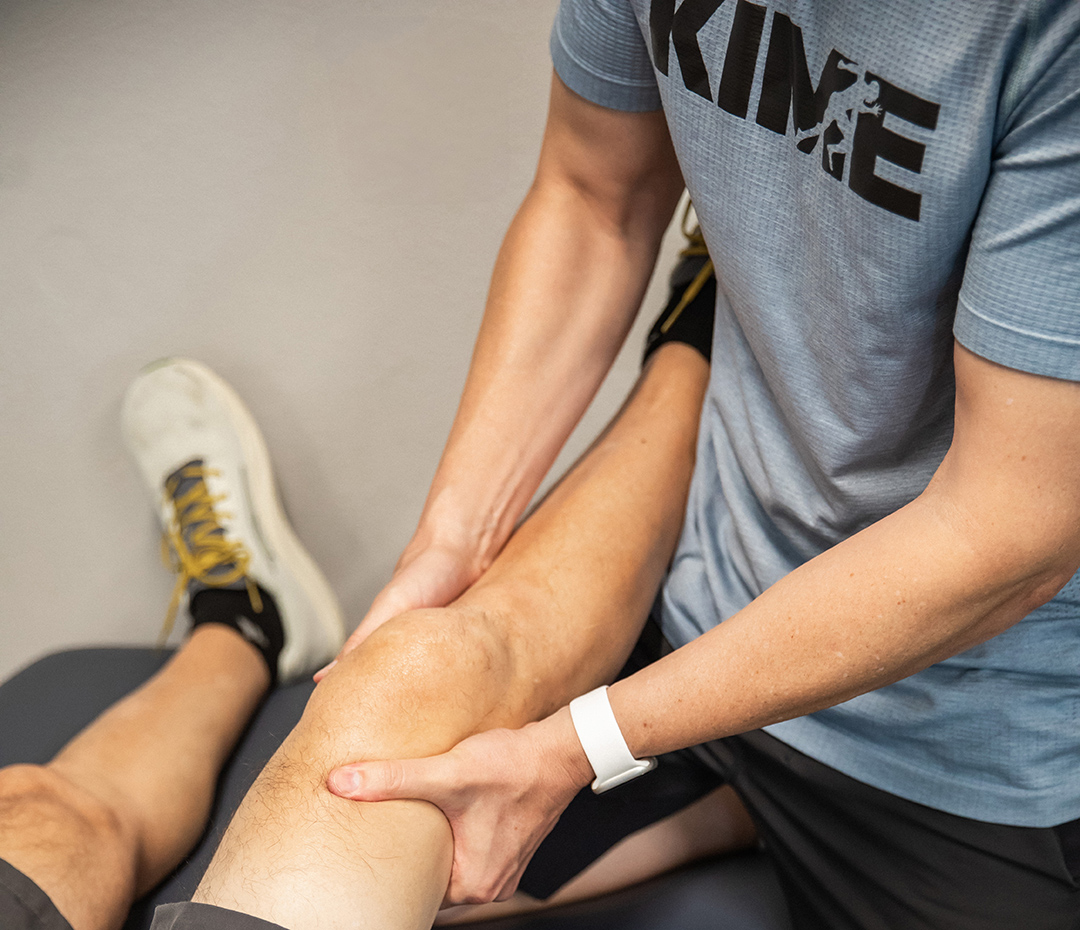
The clinician does something the imaging report cannot do. He looks at the man. The knee is not swollen. He measures extension and finds it lacking about three degrees. The patient is doing ninety percent of a strong training program — squats, lunges, deadlifts, step-ups. He has been avoiding deep squats and step-downs out of caution. He has plenty of strength. He has plenty of flexion. He cannot fully extend.
Three minutes into the assessment, the knee is extending fully.
The conversation shifts. The research is clear: in a patient with this presentation, the ability to fully extend the knee is a better predictor of needing replacement than the imaging finding. The plan becomes specific — own extension first, integrate gradually, skip the high-impact stuff for now, get back to training. The patient leaves with a different future than the one his family member gave him.
What AI got right, and what it could not see.
Drop the same MRI findings into an AI model and the recommendation that comes back — likely replacement, watch your activity, manage symptoms — isn’t wrong. It is a reasonable response to the inputs the model received. The model is doing exactly what it was designed to do.
What the model cannot do is be in the room.
It cannot see that the knee is not swollen. It cannot test extension and feel where the restriction is. It cannot run slow-motion video of a lateral cut and identify a leak in the kinetic chain that’s loading the medial compartment under fatigue. It cannot ask about sleep, about training history, about what the patient does for work, about whether he is a go-fast athlete or a change-of-pace athlete, and weigh all of that against the imaging.
The imaging is one variable. The clinician’s job is to read the other ninety-nine.
The hundred-variable difference
There is a concept that comes up again and again on KIMEcast: the difference between a junior clinician and a senior clinician isn’t knowledge of anatomy. Both know the anatomy. The difference is how many variables they can read in a person at the same time, and how well they can weigh them in context.
A first-year clinician sees five variables. An experienced clinician sees a hundred. The patient is the same. The information available is the same. The ability to take it in is different.
This is the part that doesn’t transfer to a model. Tissue under the hand. Breath pattern. The way someone moves when they think no one is watching. The shape they make at the bottom of a squat. Whether their stress is showing up in their training or their training is buffering their stress. The way they describe their pain on a Tuesday versus a Friday.
The four pillars
In the world of elite athletics, this kind of integration has a name. USA Track & Field calls them high-performance meetings — biomechanics, nutrition, sports psychology, and medical, all in the same room around the same athlete, looking for leaks.
KIME’s premise is that everyday clients deserve the same integration. Not four specialists in four rooms, but a single clinician who is competent enough across all four pillars to read them together. Because if one pillar is the limiting factor, the other three suffer. A clinician who can only see two of them will fail the patient whose problem lives in the other two.
The hundred-variable clinician is the integrator. Not a specialist in everything, but a generalist in the right things — enough biomechanics to see the kinetic leak, enough nutrition to know when sleep and food are sabotaging recovery, enough psychology to recognize fear behavior, enough medical knowledge to know when to stop and refer.
Why this is the best time to be a clinician
It’s tempting to read all of this as a defensive argument — clinicians scrambling to stay relevant in an AI world. It isn’t.
The clinicians who built their careers on dispensing protocols are in trouble. They were already in trouble before AI; the internet just exposed them faster. But for clinicians who have quietly been developing the integration skill — the ones who already do what cannot be automated — this is the most leveraged moment the field has ever seen.
AI handles the generic. The clinician handles the specific. The patient gets both, and the gap between mediocre care and excellent care becomes obvious to everyone.
That’s not a threat. That’s a permission slip.
Listen to KIMEcast Episode 58 — for the full conversation on AI, integration, and the future of high-performance clinical care.