


Kimeblog // By Tony Mikla
The Death of Generic Rehab | AI, Coaching & High Performance
May 22, 2026
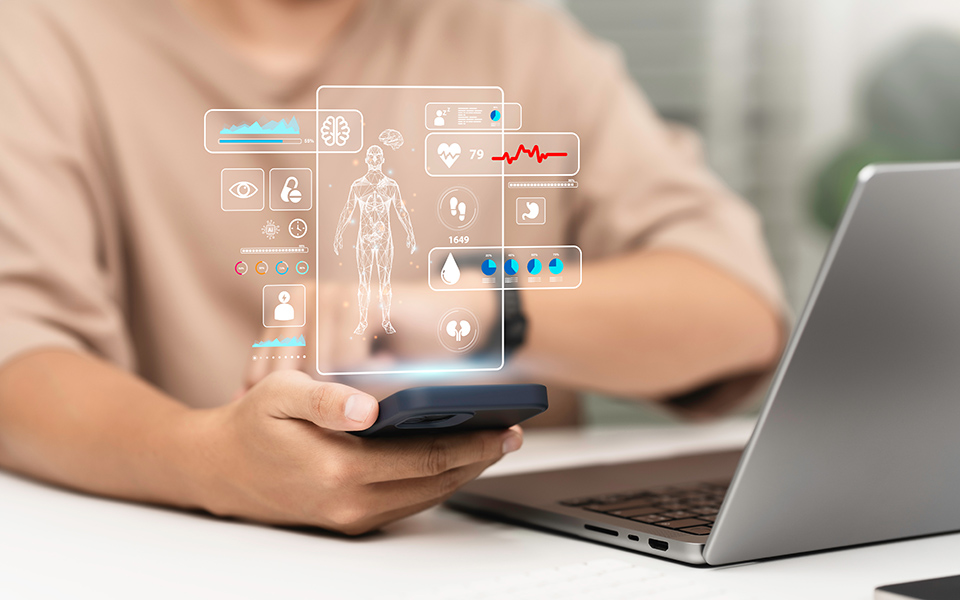
AI just made protocol-based physical therapy obsolete. Here’s what comes next for clinicians who want to stay relevant.
Click here to listen to KIMEcast Episode 58 — “The Death of Generic Rehab | AI, Coaching & High Performance” — wherever you get your podcasts.
A woman walks into the clinic with a chronic shoulder problem. She’s already done her homework — uploaded her MRI findings into ChatGPT, read the recommendation, and arrived with that conclusion already loaded into her body language. The answer she got was reverse total shoulder replacement.
Twenty years ago, this would have been the easiest conversation of the day. The patient hasn’t read the imaging. The clinician translates. The clinician decides. The clinician is the gateway to the information.
That clinic doesn’t exist anymore.
The information is now free, fast, and surprisingly good. Type a diagnosis into any major AI model and you’ll get a workable rehab protocol in seconds — phased by week, complete with exercises, even with offers to show you video demonstrations of every movement. The output is, as Tony Mikla put it on KIMEcast Episode 58, not bad at all.
That’s the death of generic rehab. And it’s not coming. It’s here.
For one segment of the physical therapy profession, this is an existential threat. If your daily clinical workflow looks like diagnosis in, three exercises out — you have already been replaced. Maybe your current patients haven’t noticed yet. Within a year or two, when every search engine returns AI-generated answers by default, they will.
For another segment of the profession, this is the most exciting moment in the field’s history.
Here’s the difference between the two groups.
The What is gone. The Why and the When are not.
What to do is no longer a moat. The rotator cuff exercises for weeks zero through four are not a moat. The progressive loading scheme for an ACL graft is not a moat. AI has those, knows them well, and will deliver them to your patient before they get out of the parking lot.
Why those exercises and when to deploy them — those still belong to the clinician. But only if the clinician has built the skill to operate at that level.
Take the shoulder case. The AI’s recommendation — reverse total replacement — wasn’t wrong as a default. Given the inputs the patient provided, it was a defensible answer. What changed the recommendation was a different prompt: I’m seeing isometric control, deltoid function in all planes, internal and external rotation, abduction, flexion, extension. The humeral head is set; when I set it, we have better motion. Is a soft-tissue fix possible?
The model’s answer shifted because the inputs shifted. The patient could not have written that prompt. A clinician operating at a protocol level could not have written that prompt. The prompt itself is a clinical skill.
The hundred-variable problem
What separates a top-decile clinician from a replaceable one is the ability to read a hundred variables in a person at once and weight them in context.
A new graduate sees five: range of motion, pain, strength, swelling, history. A senior clinician sees the same five plus another ninety-five — tissue quality under the hand, kinetic chain organization, breath pattern, fear behavior, sleep history, work stress, training age, the way a patient transfers weight when they think no one is watching.
That skill isn’t taught in school. It is also not bought with more letters after your name. The conventional career advice — go do a fellowship, go do a residency — assumes academic credentialing correlates with clinical impact. It doesn’t. There are residency-trained clinicians whose practice is still protocol-based, and there are PTs three years out of school who are operating at a hundred-variable level because they’ve been mentored deliberately.
The differentiator is reverse-engineering. Find clinicians who are actually changing outcomes at scale. Study how they think. Build the scoring system that captures it. Then close the gap between where a young clinician is and where the top performers operate — in education, in communication, in time management, in network, in tissue work, in clinical reasoning.
The real question
The question isn’t whether AI will replace clinicians. It already has, in the segment that was selling protocols.
The question is whether you’re building the kind of practice — and the kind of career — that becomes more valuable as AI gets better. Because here is the strange thing about this moment: the better AI gets at delivering generic care, the more value accrues to clinicians who can do what AI cannot.
That’s not a defensive position. That’s the most leverage clinicians have ever had.
KIME’s commitment is that any clinician who completes our development pipeline should be in the top 10% of the industry. Not good enough. Top 10%. That’s not aspiration — it’s a standard we’re willing to be held to, because we have reverse-engineered what gets people there.
If your daily practice still looks like handing out sheets, the next decade will be hard. If your daily practice looks like reading the whole person and reflecting that back to them in language they have never heard before, you are about to enter the best era physical therapy has ever had.
Listen to KIMEcast Episode 58 — “The Death of Generic Rehab | AI, Coaching & High Performance” — wherever you get your podcasts.
Recent Blogs
Archives
Kimecast Channels


